How a Personal Branding Coach Can Help You

Aminul Islam Bhuiyan
August 1, 2026

Imagine two professionals with similar qualifications, skills, and experience. One has a strong online presence, consistently shares valuable knowledge, and communicates expertise clearly. The other stays almost invisible online.
When a recruiter, client, business owner, or potential partner searches for both professionals, who do you think will attract more attention?
In today’s digital-first professional world, personal branding can make that difference.
Personal branding helps professionals communicate who they are, what they know, how they create value, and why people should trust them. It does not mean becoming famous or posting about yourself every day. Instead, it means intentionally building a professional identity that reflects your expertise, values, experience, and goals.
Whether you work as a doctor, teacher, trainer, engineer, lawyer, freelancer, marketer, consultant, designer, or entrepreneur, your professional reputation matters.
Personal branding is the process of intentionally building and managing your professional identity so people can clearly understand your expertise, values, experience, and the value you provide.
Your personal brand exists whether you actively manage it or not.
People form opinions about you based on:
A strong personal brand brings these elements together into a consistent professional identity.
Personal branding has become important because people now use digital platforms to research professionals before making decisions.
A potential client may search your name before hiring you. A recruiter may review your LinkedIn profile before contacting you. A student may check your content before joining your training program.
Your digital presence can influence those decisions.
Here are the key reasons every professional should take personal branding seriously.
Trust plays a major role in professional decisions.
People feel more comfortable working with professionals when they can understand their expertise and see evidence of their knowledge.
You can build trust by consistently sharing useful information, practical insights, case studies, professional experiences, and educational content.
For example, a digital marketing professional can publish content about:
This content gives people an opportunity to understand the professional’s knowledge before starting a conversation.
Content becomes evidence of expertise.
In Bangladesh’s competitive job market, skills matter—but visibility and professional credibility matter too.
Being good at your work does not automatically make you visible.
You may have excellent skills, but potential clients, employers, or collaborators may not know about them.
Personal branding helps you communicate your expertise across platforms such as:
A consistent digital presence increases the chances of people discovering your work.
Many professionals offer similar services.
For example, thousands of people work in:
Skills alone may not differentiate you.
Your personal brand can communicate your unique combination of:
Expertise + Experience + Perspective + Values + Communication
This combination makes your professional identity easier to remember.
A strong professional brand can create opportunities beyond your current job.
Your visibility can help you attract:
Instead of constantly searching for opportunities, you can build a reputation that helps opportunities find you.
Professionals can use content marketing to demonstrate expertise.
Suppose an engineer regularly publishes practical articles about engineering challenges. Over time, people may begin to associate that person with a particular area of expertise.
The same principle applies to doctors, teachers, trainers, lawyers, marketers, designers, and entrepreneurs.
This approach supports thought leadership.
You do not need to claim that you are an expert. Your consistent work and useful content can demonstrate your expertise.
When someone searches your name on Google, what should they find?
Ideally, they should discover accurate and professional information about you.
A well-managed personal brand can help create a stronger digital footprint through:
This approach also supports online reputation management.
Your job can change. Your company can change. Your business model can change.
Your professional reputation can continue with you.
That makes personal branding a long-term professional asset.
For example, a professional may move from employee to freelancer, consultant, trainer, or entrepreneur. A strong personal brand can make that transition easier because the audience already recognizes the person’s expertise.
Personal branding does not only involve broadcasting content. It also involves meaningful interaction.
When you share valuable insights and actively participate in professional conversations, you can connect with people who share similar interests.
A strong professional network can lead to:
Your network can become one of your most valuable professional assets.
Personal branding can also support business development.
A potential customer may discover your article through Google, watch your YouTube video, visit your LinkedIn profile, and then contact you.
This journey can happen without a traditional advertisement.
For consultants, freelancers, trainers, coaches, and service providers, personal branding can therefore become an important part of a lead-generation strategy.
People remember professionals who communicate a clear message consistently.
Consider someone who always shares practical SEO advice.
After seeing that person’s content repeatedly, you may naturally remember them when you need SEO assistance.
That is the power of consistent positioning.
Consider two digital marketing professionals.
Professional A only lists “Digital Marketer” on a social profile.
Professional B communicates a clear positioning statement, publishes educational content, shares practical SEO insights, maintains a professional website, and regularly contributes to industry discussions.
Both professionals may have similar technical skills.
However, Professional B gives the audience more reasons to remember and trust them.
That difference can influence future opportunities.
You do not need thousands of followers to build a credible professional brand.
Start with a clear strategy.
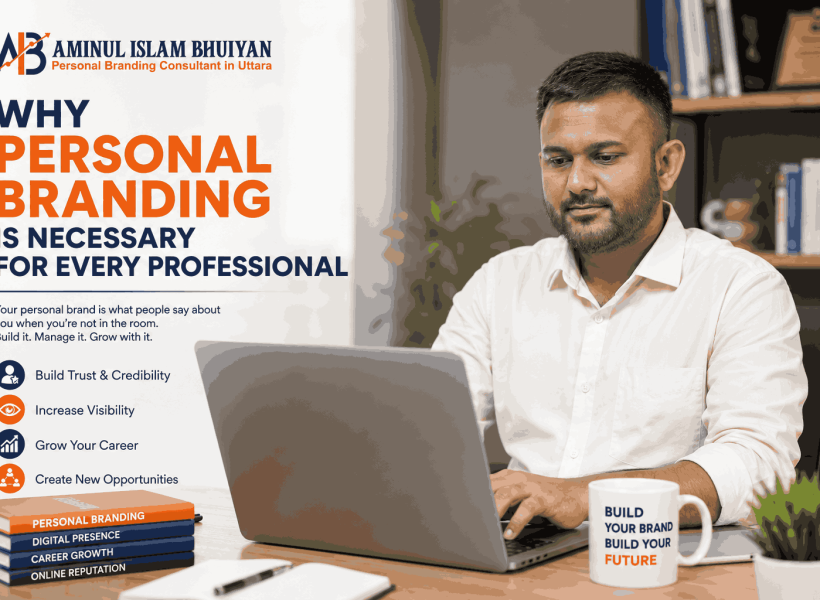
Many professionals make personal branding more complicated than necessary.
Avoid these mistakes:
Your goal should not simply be visibility.
Your goal should be meaningful visibility.
Search behavior continues to evolve.
People now use traditional search engines as well as AI-powered platforms to discover information, professionals, businesses, and experts.
This makes a strong digital footprint increasingly important.
Professionals should publish clear, factual, useful, and structured information about their expertise.
A strong AI-search-friendly personal brand can include:
The objective remains the same: make your expertise easy for both people and search systems to understand.
One common misconception says that personal branding means talking about yourself constantly.
That approach rarely creates meaningful trust.
Effective personal branding focuses on providing value.
Instead of saying:
“I am an expert.”
Show your expertise through useful explanations, practical examples, professional experiences, and problem-solving content.
Your audience should understand your expertise from the value you provide.
Personal branding is no longer limited to celebrities, influencers, or entrepreneurs.
It has become an important professional strategy for people who want to build trust, communicate expertise, increase visibility, and create long-term opportunities.
Your qualifications tell people what you have learned.
Your experience tells people what you have done.
Your personal brand tells people why they should remember you.
Start small. Define your expertise, understand your audience, optimize your professional profiles, publish useful content, and stay consistent.
You do not need to become famous.
You need to become recognizable, credible, and valuable within your professional field.
That is the real purpose of personal branding.
Personal branding means intentionally managing your professional identity and reputation so people understand your expertise, values, experience, and professional value.
Personal branding helps professionals build trust, increase visibility, demonstrate expertise, differentiate themselves, attract opportunities, and develop stronger professional networks.
Yes. Every professional has a reputation. Personal branding helps you actively shape and communicate that reputation instead of leaving it entirely to others.
There is no fixed timeline. Building a credible professional brand requires consistent content, meaningful networking, strong positioning, and continuous demonstration of expertise.
The best platform depends on your profession and target audience. LinkedIn works particularly well for professional networking, while websites, YouTube, Facebook, and other platforms can support different goals.
Yes. A strong professional presence can increase visibility among recruiters, clients, collaborators, organizations, and industry communities.
Start building a professional identity that gets noticed.
Aminul Islam Bhuiyan | Personal Branding Consultant in Uttara
Copyright © 2027 All rights reserved.